
Standards For Testing Mouthguards
Updated: Feb 4

The Mouthguard Review participates in the Amazon affiliate partnership program. Please support this website by clicking the Buy Now link to purchase a product recommended below. There is no extra cost to you. If you have purchased from the site in the past, thank you! I really appreciate your support!
Standards For Mouthguard Testing:
Have you ever noticed when your shopping for a mouthguard that they all claim to provide the best protection? But, how can you be sure? As I continue to review more and more mouthguards and research the benefits of each mouthguard that I review, I often find that most mouthguards aren't tested for impact resistance or material safety standards. Only the mouthguards that have a material worth bragging about like SISU, Game On and SafeTGard will talk about the benefits of the material used and the shock absorption qualities in their mouthguards. Shock Doctor, which is one of the top boil-n-bite mouthguard companies today, doesn't even mention anything about tests that were done on their mouthguards for impact resistance.
Custom mouthguards are made with either EVA or PolyShok™. If you decide to go the custom mouthguard route, PolyShok is definitely the material you should demand that your mouthguard is made out of. PolyShok™ has been tested by American Standards in Testing and Measurements (ASTM) to be over 150% more shock absorbent than leading traditional mouthguard (Ethyl-Vinyl Acetate) materials. These results are reproducible in any ASTM certified lab in the country. You can also request a Safety Data Sheet (SDS) from your dentist or custom mouthguard company that will give you everything you need to know regarding the safety of the custom mouthguard.
ASTM International (American Standards inTesting and Measurements), formerly known as American Society for Testing and Materials, is an international standards organization that develops and publishes voluntary consensus technical standards for a wide range of materials, products, systems, and services. Some 12,575 ASTM voluntary consensus standards operate globally. The organization's headquarters is in West Conshohocken, Pennsylvania, about 5 mi (8.0 km) northwest of Philadelphia.
Source: Wikipedia
Check out the video below from Game Day Mouthguards on how mouthguards are impact tested using a machine called the Instrom Pendulum Impact Tester. The machine is able to create and reproduce dental trauma including intensity and impact.
In the United States there isn't any requirements for chemical testing to confirm that the materials used in making the mouthguard is innocuous and won't harm the user. Most mouthguard companies will let you know if the material that they use is free of BPA, Latex, PVC and Phthalate. Because you are actually putting a mouthguard in your body (your mouth) it is very important that you know what your putting in your body and also if it is going to protect and keep you safe. Mouthguard companies in the United States have to voluntarily submit their mouthguards to be tested by independent organizations such as the American Dental Association (ADA) or the American Standards inTesting and Measurements (ASTM).
The American Dental Association (ADA) started offering a seal of approval in 2015 with standardized tests involving mouthguards. The ADA Seal provides assurance that the product has been objectively evaluated for safety and efficacy by an independent body of scientific experts, the ADA Council on Scientific Affairs. A product earns the ADA Seal for athletic mouth guards by providing scientific evidence, which is evaluated according to objective requirements, demonstrating the safety and efficacy of ready-to-use and mouth-formed (boil-and-bite) mouth guards. To qualify for the Seal of Acceptance, the company must provide evidence that:
The product components are safe for use in the mouth and do not harm or irritate oral soft tissues.
Mouth-formed appliances can be prepared by the average person with low risk of injury to oral hard or soft tissues, or damage of orthodontic appliances.
The mouth guard is free of sharp or jagged edges.
The mouth guard passes tests outlined by the American National Standards Institute/American Dental Association for hardness, ability to resist tearing and withstand impact; as well as a measurement of the amount of water absorbed.7
As of today (9/1/2021) only one mouthguard company in existence has earned the ADA seal of approval for sports mouthguards, Game On Mouthguards.

SISU Mouthguards is currently in review by the ADA to receive the seal of approval and I'm pretty sure they will be the second.
In Europe, all mouthguards must be CE certified. On commercial products, the letters CE (as the logo ) mean that the manufacturer or importer affirms the good's conformity with European health, safety, and environmental protection standards. It is not a quality indicator or a certification mark. The CE marking is required for goods sold in the European Economic Area (EEA), but is also found on products sold elsewhere that have been manufactured to EEA standards.
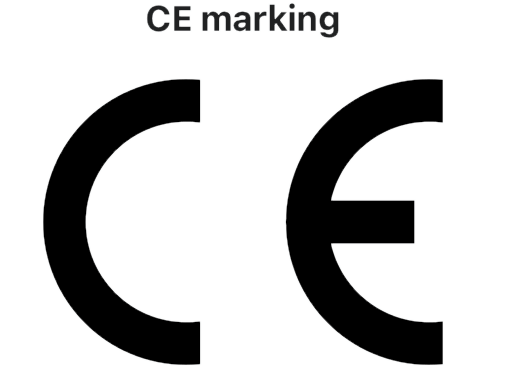
The CE mark indicates that the product may be sold freely in any part of the European Economic Area, regardless of its country of origin. It consists of the CE logo and, if applicable, the four digit identification number of the notified body involved in the conformity assessment procedure. "CE" is the abbreviation of "conformité européenne" (French for "European conformity").
CE approval is required for any personal protective equipment (PPE) like mouthguards sold within the European Economic Area (EEA). In order to acquire CE certification, mouthguards must must be innocuous and impact tested to ensure that the materials aren't harmful and so they keep users protected while participating in sports.
CE certified mouthguards I have reviewed:
Because standards aren't required for mouthguard companies to provide for impact resistance and safety in the United States, most athletes are unaware if the mouthguard they just purchased is going to protect them and keep them safe. Having a seal of approval by one entity like the ADA is essential and should be required by law for all mouthguard companies.
THE MATERIALS AND INFORMATION IN THIS ARTICLE HAVE BEEN PREPARED OR ASSEMBLED BY THE MOUTHGUARD REVIEW AND ARE INTENDED FOR INFORMATIONAL PURPOSES ONLY AND ARE NOT A SUBSTITUTE FOR ADVICE FROM A LICENSED HEALTH-CAR PROFESSIONAL. YOU SHOULD NOT RELY SOLELY ON THIS CONTENT, AND THE MOUTHGUARD REVIEW ASSUMES NO LIABILITY FOR INACCURACIES. ALWAYS READ LABELS AND DIRECTIONS BEFORE USING A PRODUCT. SOME OF THE INFORMATION MAY BE DATED AND MAY NOT REFLECT THE MOST CURRENT EVENTS. I WROTE THIS ARTICLE MYSELF AND IT EXPRESSES MY OWN OPINIONS.


Comments