
Why You Shouldn't Chew On Your Mouthguard
Updated: Feb 4

Why You Shouldn't Chew On Your Mouthguard
Mouthguards are one of the most overlooked and at the same time most important pieces of protective equipment in sports They are designed to absorb and distribute impact forces, protecting the teeth, jaw, and even reduce the risks of concussions. Yet many athletes are developing bad habits that undermine this protection.
If you have ever watched any type of sport I'm sure you have witnessed a professional or amateur athlete chewing on their mouthguard. One athlete that always seems to come to mind is Stephen Curry. Gnawing on mouthguards seems to becoming a "cool" thing to do as many athletes in almost every sport are doing it.
When younger athletes see Stephen Curry or other athletes chewing on their mouthguards they tend to this behavior because they want to be just like their idols. When professional and collegiate athletes chew their mouthguards, it normalizes unsafe behavior. Humans are not only creatures of habit, they are creatures of the art of imitation. Just take a look at Dylan Raiola and the way he tries to imitate Patrick Mahomes. Not only does he try to play like Patrick Mahomes, he even imitates the way he uses hand gestures and walks. He even went as far as to get the same haircut.
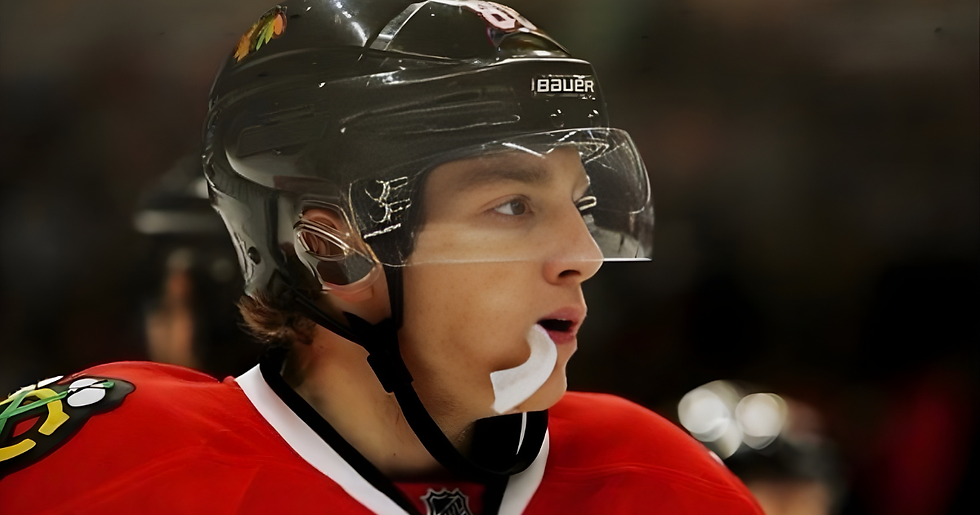
There's really no clear answers why athletes chew on their mouthguards but there are several clear answers why you shouldn't. Some athletes may do it because of a nervous habit or maybe to relieve stress in a close game. Whether chewing consciously or subconsciously, chewing on your mouthguard is a very bad idea!
Here are a few reasons why you shouldn't chew on your mouthguard:
1) Bacteria can form more easily in "chewed" areas like cracks and sharp indentations.
2) Excessive chewing will cause a mouthguard to wear down or even cause deformation which cause poor fit and protection concerns. As the fit worsens the guard may shift during play, become loose or fall out during impact.
3) Excessive chewing can cause the mouthguard to have sharp, jagged areas. If you get hit in this area, you are more likely to get a cheek laceration.
4) Having your mouthguard hanging out of your mouth distracts your focus. The mouthguard should stay in your mouth firmly against your teeth at all times.
5) Creates thin spots throughout the mouthguard, significantly reducing it's effectiveness (reduces it's ability to absorb shock).
6) Excessive chewing can obstruct airflow, making it harder to breath and take in oxygen during competition.
7) Constant chewing activates the jaw muscles unnecessarily, leading to muscle fatigue, jaw soreness and headaches.

Once compromised, a mouthguard can no longer provide consistent protection when it's needed most. A displaced mouthguard offers little to no protection, especially in contact sports where sudden, unexpected collisions are common. In some cases, a damaged or compromised mouthguard can even concentrate force rather than disperse it, making injuries more severe.

How to break the habit
If you find yourself chewing on your mouthguard, consider these solutions:
Ensure your mouthguard is properly fitted
Choose a design that fits snugly without needing to be bite down to keep it in place
Practice keeping your jaw relaxed during competition
Replace damaged guards immediately
Final Thoughts
A mouthguard one of the most important safety device an athlete will use during competition-but only when used properly. Chewing on your guard during a sporting event compromises its fit, durability, and protective function, increasing the risk of dental and jaw injuries. Wearing you mouthguard properly, without chewing ensures it can do the job that it was designed to do.
THE MATERIALS AND INFORMATION IN THIS ARTICLE HAVE BEEN PREPARED OR ASSEMBLED BY THE MOUTHGUARD REVIEW AND ARE INTENDED FOR INFORMATIONAL PURPOSES ONLY AND ARE NOT A SUBSTITUTE FOR ADVICE FROM A LICENSED HEALTH-CAR PROFESSIONAL. YOU SHOULD NOT RELY SOLELY ON THIS CONTENT, AND THE MOUTHGUARD REVIEW ASSUMES NO LIABILITY FOR INACCURACIES. ALWAYS READ LABELS AND DIRECTIONS BEFORE USING A PRODUCT. SOME OF THE INFORMATION MAY BE DATED AND MAY NOT REFLECT THE MOST CURRENT EVENTS. I WROTE THIS ARTICLE MYSELF AND IT EXPRESSES MY OWN OPINIONS.


Comments