
Are There Human Health Risks With Turf Crumb Rubber?
Updated: Feb 4
Are There Human Health Risks With Turf Crumb Rubber?
Artificial turf fields have become increasingly popular and common in youth, high school, collegiate, and professional sports. I live in a fairly large town where even the high schools have practice fields made of artificial turf.
Turf fields are praised for their durability, lower maintenance costs, and all-weather usability. Synthetic turf fields are often marketed as a safe and effecient alternative to natural grass. However, growing evidence suggests that participation in sports on artificial turf may carry distinct health risks that athletes and parents should carefully consider.
Excessive Heat Retention
One of the most well-documented risks of artificial turf is excessive heat retention. Unlike natural grass, which cools through evaporation, artificial turf absorbs and retains heat. Surface temperatures on artificial turf can exceed 150-170 degrees fahrenheit. Even if the outside temperature is mild, the artificial turf can be extremely hot because of the sunlight.
The extreme heat increases the risk of heat exhaustion, heat stroke, dehydration and reduced athletic performance. Young athletes are particularly vulnerable, as they often have less effective thermoregulation and may not recognize early warning signs of heat illness.
Exposure To Potentially Harmful Chemicals
Artificial turf is abrasive. Falls and slides result in turf burns, which are essentially friction wounds. While these injuries may appear minor, they create an entry point for bacteria.
This raises the risk of Staphylococcal (staph) infections, MRSA (methicillin-resistant Staphylococcus aureus) and delayed wound healing. Turf burns are also more likely to reopen during repeated play, increasing the risk of infection over time.
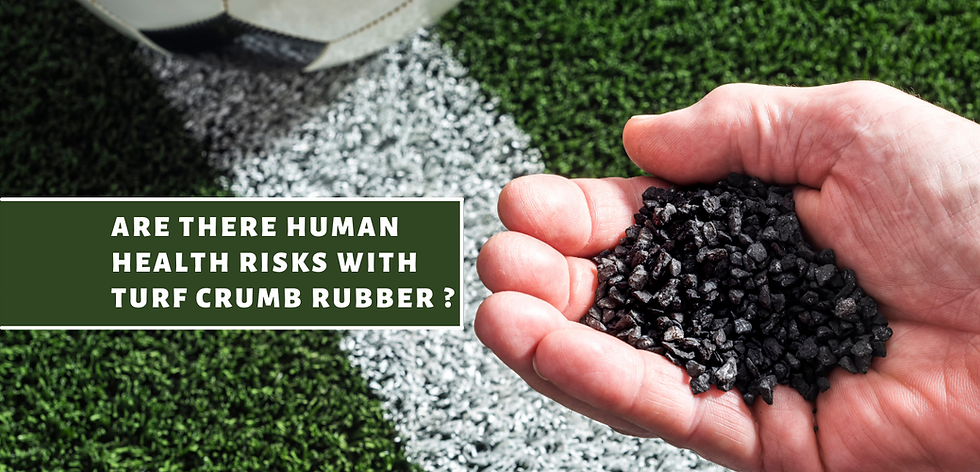
Many artificial turf systems and companies use crumb rubber infill, often made from recycled tires. These materials can contain substances such as heavy metals like lead and zinc, polycyclic aromatic hydrocarbons (PAHs), and volatile organic compounds (VOCs).
While definitive conclusions about long-term health effects are still under study, concerns remain regarding chronic exposure, especially for children who may inhale dust particles, ingest small amounts of infill, or absorb chemicals through skin contact and turf burns.
Particles released from artificial turf-including rubber dust and microplastics can become airborne during competition. Athletes with asthma or respiratory sensitivities may experience increased airway irritation, breathing difficulty during exertion or worsened allergy symptoms. These risks may be heightened during dry, windy conditions or heavy field use.
If you would like to see a more detail article concerning this topic check out this article from the National Library of Medicine https://pmc.ncbi.nlm.nih.gov/articles/PMC10262297/
Conclusion
Artificial turf has transformed modern sports, but it is not without health concerns. Increased heat exposure, injury risk, skin abrasions, and potential chemical exposure warrant careful consideration, especially for children and adolescents.
Ongoing research, transparent safety standards, adn informed decision making are essential to protecting athlete health while balancing the practical benefits of synthetic playing surfaces.
THE MATERIALS AND INFORMATION IN THIS ARTICLE HAVE BEEN PREPARED OR ASSEMBLED BY THE MOUTHGUARD REVIEW AND ARE INTENDED FOR INFORMATIONAL PURPOSES ONLY AND ARE NOT A SUBSTITUTE FOR ADVICE FROM A LICENSED HEALTH-CAR PROFESSIONAL. YOU SHOULD NOT RELY SOLELY ON THIS CONTENT, AND THE MOUTHGUARD REVIEW ASSUMES NO LIABILITY FOR INACCURACIES. ALWAYS READ LABELS AND DIRECTIONS BEFORE USING A PRODUCT. SOME OF THE INFORMATION MAY BE DATED AND MAY NOT REFLECT THE MOST CURRENT EVENTS. I WROTE THIS ARTICLE MYSELF AND IT EXPRESSES MY OWN OPINIONS.


Comments